Mechanical Properties: Strength, Hardness, Toughness, Plasticity
🔹 Strength Strength refers to a material’s ability to resist fracture or excessive permanent deformation. Failure occurs when applied stress exceeds its strength limit.
Key indicators: Ultimate strength, Yield strength (MPa), obtained via tensile / compression / bending tests from stress‑strain curves.
Influenced by chemical composition, microstructure, temperature and loading rate.
Typical values: Mild steel ~400 MPa tensile; unidirectional carbon‑fiber epoxy ~1500‑2000 MPa tensile.
🔹 Hardness Hardness describes surface resistance to local plastic deformation, closely related to wear and scratch resistance.
Measurement: Brinell HB, Rockwell HRC, Vickers HV, Shore HS by indentation tests.
Driven by yield strength, work‑hardening and microstructure.
Typical values: Quenched steel HRC 60 (~HV 700); Aluminum alloy HB ~100; CFRP surface HB30‑50.
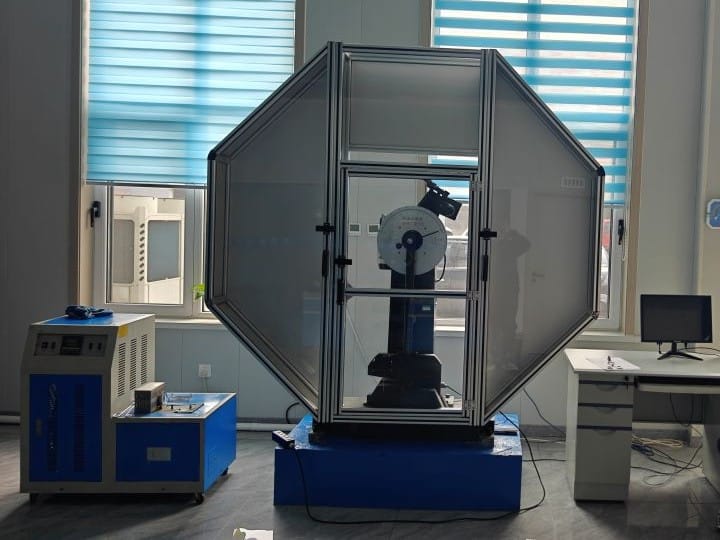
🔹 Toughness Toughness is the energy‑absorbing capacity before fracture. Tough materials sustain stress and deformation without easy breakage.
Metrics: Fracture toughness KIC, impact toughness, area under stress‑strain curve.
High toughness requires both sufficient strength and good plasticity.
Typical values: Mild steel Charpy V‑notch 100‑200 J; non‑toughened carbon‑fiber epoxy ~50‑100 J/m.
🔹 Plasticity Plasticity is the capacity to generate irreversible permanent deformation beyond elastic limit without immediate rupture.
Main parameters: Elongation, reduction of area, measured by tensile testing.
Affected by crystal structure, temperature, strain rate and impurities.